Introduction
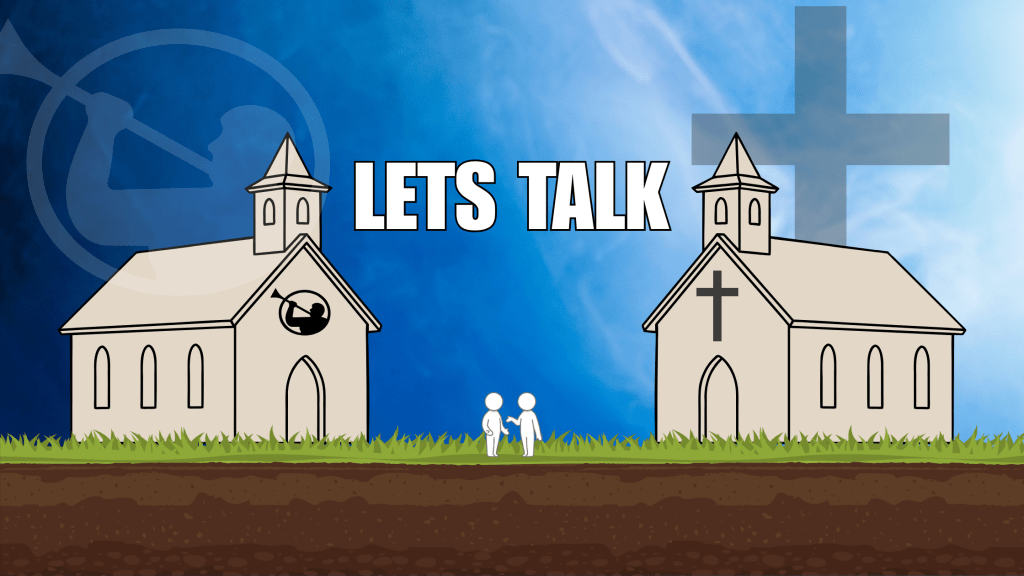
This blog post exists to take a critical and honest look at Mormonism (also known as LDS), not from a place of hostility, but from a place of truth-seeking and doctrinal clarity.
The need for this examination arose during conversations I had with a Mormon elder and a trainee who were attempting to convert me. What quickly became apparent was not malice or ill intent, but confusion. There was a consistent use of Christian terminology paired with definitions that were fundamentally different from historic Christian meaning. Words like Jesus, grace, salvation, and God were familiar, yet when pressed for definition, they no longer aligned with the faith once delivered to the saints.
During these conversations, I was told that Mormonism represents the final product of Christianity, that it is the completed and restored revelation of what Christianity was meant to become. I was also told that Scripture had been corrupted, that truth had been lost, and that modern revelation was necessary to correct what came before. When I began explaining the preservation of Scripture, the abundance of Greek manuscripts, and the consistency of biblical doctrine throughout history, the discussion shifted away from evidence and toward authority claims.
Joseph Smith himself lived during a period of intense religious fragmentation. The early 19th century in America was marked not by the Protestant Reformation, but by a wave of new religious movements and theological experimentation. This was not a return to historic Christianity, but a break from it. It was within this environment that Mormonism emerged, shaped not by apostolic continuity, but by restorationist ideology and dissatisfaction with denominational disagreement.
As someone who studies other religions seriously in the pursuit of truth, I have learned that genuine truth does not fear questions. Truth does not require protection from scrutiny. If a belief system collapses under honest examination, then it was never truth to begin with. Scripture consistently invites testing, examination, and discernment. The Christian faith has nothing to hide because it is grounded in public revelation, historical events, and preserved testimony.
The apostle Peter instructs believers plainly:
“But in your hearts regard Christ the Lord as holy, ready at any time to give a defense to anyone who asks you for a reason for the hope that is in you.” (1 Peter 3:15)
The Greek word translated as “make a defense” or “give an answer” is apologian, from the root apologia. This has nothing to do with apologizing in the modern sense. It refers to a reasoned explanation, a justification, an answer grounded in truth. From this word we get the terms apologetics and apologist, which describe the rational defense of the Christian faith.
Equally important is how that defense is given. Peter continues by emphasizing that it must be done with gentleness and respect. Christians are not called to insult, demean, or condemn those who disagree. Nor are we to respond with arrogance or dismissiveness. We are called to speak truth clearly, honestly, and without compromise, while still recognizing the humanity of the person in front of us.
This post is not written as an emotional rant. It is not a personal attack. It is an exposition of doctrine, history, and evidence. Its purpose is to shine light on Mormonism by examining its claims honestly and measuring them against Scripture, historical record, logical consistency, and the gospel of Jesus Christ.
Hard questions will be asked. Definitions will be examined. Claims will be tested. If Mormonism is true, it should withstand this examination. If it is not, then love demands that the truth be spoken plainly.
The Beginning
Origins Matter: How Mormonism Started and Why It Matters
Every belief system has an origin, and origins matter because truth does not appear in a vacuum. Christianity is rooted in first-century history, apostolic eyewitness testimony, and publicly proclaimed events. Mormonism, by contrast, does not emerge from apostolic Christianity, but from 19th-century American restorationism, shaped heavily by its cultural and religious environment.
Joseph Smith was not a “Mormon” in the way the term is understood today. Mormonism did not exist until after his claims. What existed was a religious climate defined by division, experimentation, and dissatisfaction with established churches. Smith lived during the Second Great Awakening, a period marked by intense revivalism and theological instability. Competing movements claimed new revelations, restored authority, or special insight into what Christianity was “meant to be.”
This environment matters because Mormonism did not arise as a continuation of historic Christianity, but as a response to perceived fragmentation within it.
During this period, several themes were common:
- A rejection of historic creeds
- A suspicion of theological tradition
- A desire for a “pure” restoration untainted by history
- Competing revival movements claiming divine authority
Joseph Smith himself expressed frustration with denominational disagreement. Rather than seeing disagreement as a call to deeper study and unity around Scripture, restorationist theology interpreted disagreement as proof that Christianity had failed altogether. That assumption becomes foundational to Mormonism.
Central to Mormonism’s origin story are the golden plates from which the Book of Mormon was allegedly translated. These plates were said to be physical, tangible artifacts. That detail is important because physical artifacts invite verification.
Yet the plates were:
- Never examined by neutral or independent parties
- Never subjected to scholarly or linguistic analysis
- Removed before verification could take place
If God chose to anchor revelation to a physical object, the natural expectation would be transparency, not removal. Scripture does not shy away from scrutiny. Biblical revelation occurred publicly, was proclaimed openly, and was preserved within the community of God’s people.
The removal of the plates before verification introduces a serious logical tension: why provide physical evidence only to eliminate the possibility of examination?
Scripture affirms that God’s word endures and remains accessible:
“The grass withers, the flower fades, but the word of our God stands forever.” (Isaiah 40:8)
“The words of the LORD are pure words… You, LORD, will keep them; You will guard us from this generation forever.” (Psalm 12:6–7)
The question then becomes unavoidable: When did “forever” begin? If Scripture was preserved for Israel, the apostles, and the early Church, why would it suddenly require restoration centuries later? Restoration implies loss or corruption. Preservation denies both.
Equally significant is the method by which the Book of Mormon was translated. The process was not stable or consistent. Over time, explanations of how the translation occurred shifted, including accounts involving a seer stone and translation methods that did not require the plates to be physically present.
This stands in stark contrast to how biblical Scripture is translated.
Biblical translation is a disciplined, transparent process carried out by teams of scholars who work from original Hebrew, Aramaic, and Greek manuscripts. Translators analyze grammar, syntax, historical context, and manuscript variation. Two primary philosophies guide this work:
- Formal equivalence, which seeks word-for-word accuracy
- Dynamic equivalence, which focuses on conveying meaning clearly
Neither approach involves mystical instruments, hidden texts, or unverifiable processes. The goal is clarity, accountability, and fidelity to the original text.
The shifting explanation of the Book of Mormon’s translation method raises serious concerns. Truth does not need to reinvent its process to survive scrutiny.
One of the most telling moments in early Mormon history is the loss of the 116 manuscript pages. When these pages disappeared, they could not be reproduced. Rather than re-translating the same content to demonstrate consistency, the narrative changed.
This failure of replication is significant. If a translation is accurate and divinely guided, it should be reproducible. Scripture does not fear comparison. The New Testament survives precisely because it was copied, examined, and preserved across centuries and regions.
A revelation that cannot withstand replication or comparison does not resemble biblical revelation.
Finally, there is the issue of evidence. No independent historical, archaeological, or linguistic evidence corroborates the foundational events of early Mormonism. Entire civilizations, languages, and historical narratives are asserted without trace.
This is not faith. This is blind acceptance.
Even biblical prophecy invites fulfillment and verification. Scripture does not ask God’s people to suspend discernment. When predictions fail, Scripture calls them false. When claims lack evidence, Scripture commands testing.
If events central to Mormonism cannot be verified, examined, or corroborated, then the conclusion is not uncomfortable, but unavoidable: these claims do not meet the standard of truth Scripture itself demands.
So it brings me to this point, the questions that must be answered are:
Why would God provide physical artifacts for revelation, only to remove them before scrutiny?
Why does the translation method change depending on circumstance?
Why does no independent evidence corroborate these foundational events?
Why does Mormonism require a restoration when Scripture testifies to preservation?
Origins matter. How a belief system begins often explains why it believes what it believes. Mormonism’s beginnings are not apostolic, not transparent, and not verifiable. That reality must be faced honestly before any claim of restored truth can be taken seriously.
The Claim
At the heart of Mormonism is a single, essential claim: Christianity was lost and had to be restored. Without this claim, Mormonism has no theological foundation. It does not present itself as merely another Christian denomination, but as the necessary correction to a failed and corrupted faith.
This claim sounds compelling on the surface, especially in a world where denominational disagreement is visible and confusing. But a claim of restoration carries a burden of proof. It requires more than assertion. It requires evidence. When examined carefully, Mormonism asserts restoration, but cannot demonstrate loss. Restoration theology is not a vague concept. It requires specific, demonstrable conditions:
- A documented apostasy
- Evidence of lost doctrine or authority
- Proof that the lost truth was accurately recovered
Mormonism asserts all three. It substantiates none. Scripture never teaches that Christ’s Church would vanish entirely. In fact, it teaches the opposite.
- Jesus states plainly that the gates of Hades will not prevail against His Church (Matthew 16:18).
- Paul describes the Church as the pillar and foundation of the truth (1 Timothy 3:15).
- Jude speaks of “the faith once for all delivered to the saints” (Jude 3), not a faith temporarily delivered and later retrieved.
A universal apostasy would require God to fail at preserving His own work, contradicting His promises and undermining His character. The earliest Christian writers did not speak as men scrambling to rediscover lost truth. They spoke as guardians of something already received.
Irenaeus, writing in the second century, directly addressed claims that true doctrine had been lost. In Against Heresies, he argues that the truth of Christianity was publicly proclaimed, preserved through apostolic succession, and accessible to all who wished to examine it. His argument assumes continuity, not collapse.
Similarly, Tertullian challenged heretical movements by appealing to the consistency of doctrine held across churches founded by the apostles. His logic was simple: truth does not need reinvention when it has been preserved.
These men lived far closer to the apostles than any modern movement. If a total apostasy had occurred, they would have been the first to recognize it. Instead, they argue the opposite. Restoration theology requires silence from history. Christianity speaks loudly through it.
Mormonism’s claim of restoration depends on a dangerous theological assumption: that later revelation can override earlier revelation. Once that premise is accepted, several consequences follow immediately. If prophets can contradict prior revelation, then:
- Truth becomes unstable
- Doctrine becomes provisional
- God appears to change His mind
Scripture explicitly rejects this framework.
- God does not change (Malachi 3:6).
- God does not contradict Himself (Numbers 23:19).
- New revelation does not negate old revelation; it fulfills and clarifies it.
When later revelation is treated as superior to earlier revelation:
- Scripture loses authority
- Apostolic testimony is demoted
- Revelation becomes a matter of power, not truth
At that point, the issue is no longer restoration. It is replacement. This structure is not unique to Mormonism. Islam makes the same fundamental claim:
- Earlier revelation was corrupted
- A later prophet restores truth
- Subjective confirmation validates authority
Both systems assert that what came before was insufficient and unreliable, and that what comes later must therefore take precedence. The problem is not emotional. It is logical. If this structure is valid, then any future claimant can assert:
- Corruption of prior truth
- New revelation
- Restored authority
Without an objective standard, nothing prevents endless prophetic override. Truth becomes whoever speaks last with enough confidence. Christianity rejects this structure entirely. The apostles did not point the Church toward future prophets who would redefine God. They pointed the Church back to Christ, His gospel, and the Scriptures already delivered. Scripture does not leave prophecy unguarded.
- Deuteronomy 18 provides clear criteria for evaluating prophets
- Galatians 1:8 warns that even angelic revelation is to be rejected if it contradicts the gospel already received
These are not suggestions. They are safeguards. If Scripture gives objective validation markers for prophecy, why would those markers suddenly be ignored? Why would God establish a foundation of checks only to later ask His people to abandon them?
A system that requires believers to suspend biblical discernment is not a restoration of Christianity. It is a departure from it. This question must be faced honestly.
If modern revelation outranks apostolic testimony, then Christianity is no longer anchored in Christ’s apostles.
If doctrine can be reversed rather than clarified, then truth is no longer stable.
If authority rests in ongoing override rather than preserved witness, then what exists is not restoration, but reinvention.
Christianity does not claim to be the latest version of truth. It claims to be the once-for-all revelation of God in Christ.
A movement that must replace the foundation in order to stand has already confessed that it is not standing on the same ground. This leads to the following questions that have to have an answer.
- How does Mormonism logically differ from Islam’s restoration claim structure?
- What prevents endless prophetic override once contradiction is allowed?
- Why should modern revelation outrank apostolic testimony?
- At what point does “restoration” cease to be restoration and become an entirely new movement?
These are not hostile questions. They are necessary ones. Truth is not preserved by avoiding them. Truth is revealed by answering them honestly.
The Scripture in Question
At the center of Mormonism’s restoration narrative is a necessary assumption: Scripture was corrupted, altered, or lost, and therefore could not be trusted to preserve the truth of Christianity. Without this assumption, the justification for restoration collapses.
Christianity, however, makes a very different claim. It affirms that God not only revealed His Word, but preserved it. The question, then, is not whether Scripture has variants or translations. The question is whether Scripture has been faithfully transmitted and reliably preserved. When examined honestly, the historical answer is clear.
Christian Scripture is the most well-attested body of ancient writing in human history, making the claim of loss not merely unlikely, but untenable.
No ancient work even comes close to the New Testament in manuscript support. We possess thousands of Greek manuscripts, along with early translations into Latin, Syriac, and Coptic, many dating within just a few centuries of the original writings. These manuscripts are spread across vast geographical regions, which actually strengthens their reliability. A corrupted text does not remain consistent across continents and cultures.
This abundance allows scholars to compare texts, identify variations, and determine with high confidence what the original authors wrote. The presence of textual variants is not evidence of corruption; it is evidence of transparency. Variants are known precisely because the manuscript record is so rich. By contrast, a text that cannot be examined, compared, or cross-checked cannot be verified at all.
Scripture was never hidden from God’s people. From the earliest centuries, the Bible was translated into the common languages of the world so that ordinary believers could read, hear, and understand it. This was not an accident. It reflects the biblical conviction that God’s Word is meant to be proclaimed, preserved, and accessible.
This directly contradicts the idea that Scripture quietly disappeared or was universally corrupted without notice. A corruption of that scale would leave a trail. History shows none.
The early Church fathers quote Scripture extensively. In many cases, entire New Testament books can be reconstructed solely from their writings. These citations span centuries and regions, yet reflect consistent doctrine regarding God, Christ, salvation, and the gospel.
If Scripture had been lost or substantially altered, the early Church would reflect confusion, contradiction, or silence. Instead, it reflects continuity. Writers like Irenaeus and Tertullian appeal confidently to Scripture as a stable and authoritative source, not as a broken relic in need of future repair. They argue against heresy not by appealing to hidden revelation, but by appealing to the publicly known Scriptures already in use.
One of the most common misunderstandings surrounding biblical transmission is the assumption that textual variants equal unreliability. This is simply false. Textual variants are expected in any ancient manuscript tradition copied by hand. The critical question is whether those variants affect doctrine. They do not. No central Christian doctrine rests on a disputed text. This is acknowledged across the scholarly spectrum, including by critics of Christianity.
A corrupted text loses coherence. Scripture has not. Even The New Testament is not supported only from within Christianity. Multiple non-Christian historians reference Jesus, His execution, and the early Christian movement.
Figures such as Tacitus, Josephus, and Pliny the Younger confirm key aspects of the New Testament narrative. These are not theological endorsements, but historical acknowledgments. They demonstrate that the core events of Christianity were publicly known, recorded, and discussed outside the Church. This matters because a faith rooted in real history leaves traces beyond its own community.
The Bible is also unapologetic about its own preservation. Scripture repeatedly affirms that God’s Word endures, stands, and remains:
- God’s Word stands forever (1 Peter 1:25)
- God guards what He has spoken (Jeremiah 1:12, Isaiah 55:11)
- Heaven and earth pass away, but God’s words do not (Matthew 24:35)
If Scripture teaches its own preservation, then claiming its loss is not a neutral position. It is a rejection of Scripture’s own testimony about itself. This raises an unavoidable theological question: When did God stop preserving His Word? If God preserved Scripture for Israel, for Christ, and for the apostles, why would He fail to preserve it for the Church?
This brings us to a contradiction Mormonism cannot resolve.
– Mormonism relies on the Bible.
– Mormonism undermines the Bible.
Both cannot be true at the same time. If the Bible is unreliable, then any theology built upon it is unstable. If the Bible is reliable, then restoration theology is unnecessary. There is no middle ground that preserves logical consistency.
Christianity does not ask believers to choose between faith and evidence. It presents both together. Scripture has endured intense scrutiny, opposition, and attempts at eradication, yet remains intact, influential, and transformative across cultures and centuries. So we must ask these questions:
- If Scripture was corrupted, how was truth known for over 1,700 years?
- Why trust later texts with less evidence over earlier texts with more?
- Why would God preserve Israel’s Scriptures but fail with the Church?
- Why undermine the very foundation you rely upon?
The claim that Scripture was lost does not arise from evidence. It arises from necessity. Restoration theology requires it. History does not support it. What Scripture presents is not a broken record waiting to be restored, but a preserved witness that continues to testify to the same Christ, the same gospel, and the same truth.
History
Christianity is not afraid of history. From its earliest days, it has tied its truth claims to real people, real places, real events, and real timelines. Scripture does not present itself as abstract spirituality or symbolic mythology. It presents itself as history that can be investigated.
Mormonism does the same. The Book of Mormon does not claim to be allegory. It claims to be a literal historical record describing ancient civilizations, migrations, wars, kings, prophets, languages, and geography in the Americas.
That means it is historically testable. When both Christianity and Mormonism are held to the same historical standard, the difference is not subtle.
For centuries, critics claimed the Bible was historically unreliable. They argued that biblical figures were legendary, locations were symbolic, and narratives were theological inventions. Those claims have steadily collapsed under archaeological discovery.
Modern biblical archaeology is not driven by blind faith. It is conducted by academic institutions, peer-reviewed journals, and interdisciplinary scholars, many of whom are not Christians.
Organizations such as the Biblical Archaeology Society, through publications like Biblical Archaeology Review, routinely publish findings that confirm biblical people, places, and cultural details. The Associates for Biblical Research conducts original fieldwork specifically testing biblical claims against physical evidence. The Nelson Glueck School of Biblical Archaeology has overseen major excavations that anchor Scripture firmly in historical geography. This is not theology protecting itself. This is history doing its job.
The biblical narrative is filled with named rulers, cities, and political details that critics once dismissed as fiction. Archaeology has steadily moved many of these from “myth” to “history.”
Kings of Israel and Judah such as Omri, Ahab, Jehu, Hezekiah, Manasseh, and Jehoiachin appear in Assyrian and Babylonian inscriptions. Foreign rulers mentioned in Scripture, including Pharaohs and Assyrian kings like Tiglath-Pileser III and Sennacherib, are confirmed in contemporary records.
In the New Testament, the discovery of the Pilate Stone in 1961 confirmed both the existence and correct title of Pontius Pilate as Prefect of Judea, a detail once questioned by historians.
Locations once dismissed as symbolic have been unearthed as physical realities. The Pool of Siloam, referenced in John’s Gospel, was discovered in Jerusalem in 2004. The Tel Dan Stele, discovered in 1993, contains the first extra-biblical reference to the “House of David,” confirming David as a historical dynastic founder rather than a later literary invention.
Even entire peoples once denied by critics, such as the Hittites, have been fully vindicated through archaeology. Their empire and capital, Hattusa, are now well-documented. The biblical world continues to surface in the ground.
So what is the consensus? This cumulative evidence is synthesized in standard academic works such as The IVP Atlas of Bible History, The Harvest Handbook of Bible Lands, and the HarperCollins Atlas of Bible History. These resources do not speculate. They map Scripture onto archaeology, geography, and ancient Near Eastern history using data gathered over decades.
Egyptologist Kenneth Kitchen, in On the Reliability of the Old Testament, argues convincingly that the Hebrew Bible fits its ancient context far better than its critics allow. While debates continue at the margins, the overall direction of scholarship has been clear: the Bible consistently aligns with the historical world it describes.
Jewish archaeologist Nelson Glueck famously stated that no archaeological discovery has ever overturned a biblical reference. While modern minimalist scholars may debate the scope of that statement, its enduring relevance remains: archaeology has repeatedly corrected critics, not Scripture. Christianity stands because history continues to affirm its setting.
So how does this compare to Mormonism? The Book of Mormon describes:
- Large civilizations numbering in the millions
- Advanced warfare with steel weapons
- Horses, chariots, armor, and coinage
- Complex writing systems and record keeping
- Major cities, fortifications, and battlefields
These are not vague claims. They are concrete historical assertions. Yet despite over a century of archaeological effort, no independent evidence has confirmed:
- Nephite or Lamanite civilizations
- Book of Mormon geography
- Hebrew or Egyptian-derived writing systems in ancient America
- Pre-Columbian steel, horses, or chariots consistent with the narrative
This absence is not neutral. When claims are this large, silence is meaningful. Large populations leave remains. Empires leave roads, weapons, inscriptions, graves, and debris. The biblical world does. The Book of Mormon world does not.
Various LDS scholars and apologists have attempted to propose limited geography models, shifting locations from North America to Mesoamerica and narrowing the scope of the narrative. These attempts have not produced consensus or confirmation. Instead, they reveal a pattern: geography adapts to evidence failure, rather than evidence confirming geography.
Christianity does not need to relocate Jerusalem to survive scrutiny. Mormonism continually relocates its past because it cannot anchor it.
So this brings up a valuable point. Christianity requires faith, but it does not require silence. It invites examination because it is rooted in history that can be investigated.
Mormonism requires belief in a historical narrative that leaves no trace. That is not faith grounded in evidence. That is belief sustained by exemption.
The difference matters.
This in turn, brings up more questions that need to be answered that still remain.
- Why do biblical people and places consistently appear in the archaeological record while Book of Mormon civilizations do not?
- Why must Mormon geography remain flexible while biblical geography remains fixed?
- Why does Christianity welcome historical testing while Mormonism must continually explain its absence?
- At what point does silence stop being patience and become evidence itself?
History does not determine truth on its own, but it does expose false claims. Christianity survives historical investigation because it belongs to history. Mormonism asks history to step aside. Truth does not need that request.
Doctrine
One of the most significant reasons Mormonism is often mistaken for a Christian denomination is language. Mormonism uses many of the same words Christianity uses: Jesus, God, grace, salvation, atonement. To the casual listener, the vocabulary sounds familiar.
But doctrine is not determined by shared vocabulary. It is determined by definition. When terms are shared but meanings are fundamentally different, what exists is not a disagreement within Christianity, but a categorical difference of belief. This is not a denominational divide. It is a different theological system altogether.
Christianity does not define its doctrine arbitrarily. Its definitions come from Scripture itself, interpreted through the original Hebrew and Greek, affirmed by the early Church, and preserved through centuries of teaching. Mormonism, by contrast, reuses Christian terms while redefining them within a completely different theological framework.
So lets start with Who is Jesus Christ? For starters, Christianity confesses that Jesus Christ is eternally God by nature, not by achievement. The New Testament is explicit:
- “In the beginning was the Word, and the Word was with God, and the Word was God.” (John 1:1)
- “All things were created through Him and for Him.” (Colossians 1:16)
The Greek term used in John 1:1, θεὸς (theos), is the same word used throughout the New Testament to refer to the one true God. John does not say the Word became God, nor that the Word was a god by rank or progress. He says the Word was God.
Christian theology further affirms that Christ is ὁμοούσιος (homoousios) with the Father, meaning “of the same essence” or “same being.” This was not invented centuries later. It was articulated to defend what Scripture already taught: Jesus shares the very nature of God.
Mormon theology, however, teaches that Jesus is a spirit child of the Father, a progressed being who attained godhood. In this framework, Jesus is not eternally God by nature, but God by development.
These two claims cannot coexist.
If Jesus became God, then He is not eternal.
If He is not eternal, then He is not the Creator of all things.
If He is not the Creator, then He cannot be worshiped without committing idolatry.
Christianity worships Christ because He is God. Mormonism reveres Christ as a god among others. That is not the same Jesus.
So this leads to another question, Who is God? Christianity teaches that God is eternal, uncreated, and unique by nature.
The Hebrew Scriptures are unambiguous:
- “Before Me no god was formed, nor shall there be any after Me.” (Isaiah 43:10)
- “I am the LORD, and there is no other.” (Isaiah 45:5)
The Hebrew word אֱלֹהִים (Elohim) is used of God as the ultimate, self-existent being. Scripture never presents God as one being among many, nor as a man who progressed into deity. God simply is.
The divine name revealed in Exodus 3:14, אֶהְיֶה אֲשֶׁר אֶהְיֶה (Ehyeh Asher Ehyeh), communicates self-existence. God does not become. God does not develop. God does not progress. He exists eternally.
Mormon theology teaches something radically different: that God the Father was once a man who attained godhood, and that humans may likewise become gods in the same sense.
This introduces an infinite regression of gods, a concept unknown to Scripture and philosophically incoherent. An infinite chain of dependent beings cannot explain existence. Christianity resolves this by affirming God as the uncaused cause, the necessary being upon whom all else depends.
The biblical God is categorically different from all creation. The Mormon god is not.
So then, what about salvation? Christianity defines salvation as God’s gracious act of rescuing sinners, accomplished fully by Christ and received by faith. The New Testament repeatedly uses the Greek word χάρις (charis), meaning unmerited favor, to describe salvation.
- “By grace you have been saved through faith… not a result of works.” (Ephesians 2:8–9)
- “To the one who does not work but believes… his faith is counted as righteousness.” (Romans 4:5)
Salvation, in Christianity, is not a process of becoming worthy. It is a declaration of righteousness based on Christ’s finished work. Obedience follows salvation; it does not earn it.
Mormon theology presents salvation as conditional, often framed as grace applied after all we can do. Ordinances, worthiness, and obedience become requirements for eventual exaltation. This fundamentally changes the nature of grace.
If grace is conditional, it is no longer grace.
If salvation must be earned, it is no longer a gift.
If assurance is impossible, peace with God is replaced by performance.
Christianity answers the question, “How can sinners be reconciled to a holy God?”
Mormonism answers a different question: “How can humans become divine?”
Those are not variations of the same gospel. This is why Mormonism cannot accurately be described as a Christian denomination. The disagreement is not over secondary doctrine, church structure, or sacramental practice. It is over who God is, who Christ is, and how salvation works.
Shared words do not equal shared faith. When Christian terms are redefined, the result is not clarification, but substitution. Christianity is not being restored. It is being replaced.
What Makes a Prophet
This topic is important since Mormonism is fundamentally a prophet-driven movement, the question of prophecy is not secondary. It is foundational. If the prophetic claim collapses, the entire structure collapses with it.
The Book of Mormon and LDS theology present themselves as grounded in Scripture, yet they simultaneously claim that Scripture was insufficient, corrupted, or incomplete. That tension makes one question unavoidable: by what standard is a prophet validated?
Christianity does not leave that question open-ended. Scripture defines what a prophet is, what a prophet does, and how a prophet is tested.
In the Old Testament, the primary Hebrew word for prophet is נָבִיא (nabi), derived from a root meaning “to bubble forth” or “to utter.” A prophet is one who speaks forth the words of God, not his own ideas. Other terms used include רֹאֶה (ro’eh) and חֹזֶה (hozeh), often translated “seer,” emphasizing that a prophet receives revelation from God rather than generating it.
The defining characteristic of a biblical prophet is not creativity, charisma, or authority over people, but faithful transmission of God’s already-revealed will. Scripture is explicit:
- God puts His words in the prophet’s mouth (Jeremiah 1:9)
- Prophecy does not originate from human interpretation (2 Peter 1:20–21)
- The prophet speaks for God, not instead of God (Deuteronomy 18:18)
Importantly, foretelling the future is not the primary role of a prophet. Prophets primarily call God’s people back to covenant faithfulness, correct moral and theological error, and proclaim what God has already revealed.
This definition matters because it immediately rules out a prophet whose role is to rewrite, override, or contradict prior revelation.
To further explore this topic, Scripture does not ask God’s people to accept prophetic claims blindly. It gives explicit tests.
1. Doctrinal Consistency
A true prophet will not contradict what God has already revealed.
- “If a prophet… says, ‘Let us go after other gods,’ you shall not listen.” (Deuteronomy 13:1–3)
No amount of signs, sincerity, or spiritual experience can override this standard.
2. Prophetic Accuracy
What a prophet speaks must come to pass.
- “When a prophet speaks in the name of the LORD, if the word does not come to pass… the prophet has spoken presumptuously.” (Deuteronomy 18:22)
This is not a flexible guideline. Scripture gives no allowance for failed prophecy.
3. Fidelity to God’s Character
God does not contradict Himself.
- “God is not a man, that He should lie.” (Numbers 23:19)
- “I the LORD do not change.” (Malachi 3:6)
Any prophetic claim that portrays God as inconsistent, evolving, or self-correcting fails the biblical test by definition.
So does the book of Mormon claim Scriptural grounding? Yes. Mormonism claims continuity with biblical revelation. It appeals to Scripture, references biblical events, and presents itself as restoring what Scripture originally taught.
But this is where the contradiction becomes unavoidable.
If Scripture is corrupted, then it cannot serve as a foundation.
If Scripture is reliable enough to support Mormon claims, then restoration is unnecessary.
Mormonism attempts to stand on Scripture while simultaneously undermining it. That is not biblical prophecy. That is theological borrowing.
Biblical prophets never claimed Scripture was broken and needed replacement. They called people back to what God had already said.
Even the early Church did not expect future prophets to redefine God, Christ, or salvation. They understood prophecy as subordinate to apostolic witness, not superior to it.
The apostles are described as the foundation of the Church, with Christ Himself as the cornerstone (Ephesians 2:20). Prophets in the New Testament functioned within that foundation, not over it. Their role was to edify, exhort, and apply truth, not to introduce new doctrine that contradicted the gospel already received.
This is why the Church rejected movements that claimed new revelation altering core doctrine. The issue was not whether someone claimed divine inspiration, but whether that claim aligned with what had already been revealed in Christ.
Mormonism requires redefining prophecy in order to survive.
If prophets can contradict Scripture, then Scripture loses authority.
If prophets can correct apostles, then apostolic witness is no longer foundational.
If prophets can redefine doctrine, then truth becomes provisional.
At that point, prophecy is no longer a servant of truth. It becomes a source of power. This raises an uncomfortable comparison. Islam operates on the same structural claim:
- Earlier revelation was corrupted
- A later prophet restores truth
- Subjective confirmation validates authority
Christianity rejects this structure entirely. It does not point forward to a prophet who will correct Christ. It points back to Christ as the final revelation of God. The New Testament is unambiguous:
- “Even if we or an angel from heaven should preach a gospel contrary to the one you received, let him be accursed.” (Galatians 1:8)
This verse alone disqualifies any movement that claims later revelation can override apostolic teaching. It does not matter how sincere the prophet appears. It does not matter how compelling the story sounds. Truth is not decided by novelty.
Christianity does not need restoration because it does not believe the gospel was lost. It believes it was delivered once for all.
Summary of Disqualifying Points
So lets summarize everything we discussed. Christianity does not reject Mormonism because of cultural differences, personal discomfort, or denominational preference. It rejects Mormonism because, when measured by the standards Scripture itself provides, Mormonism fails at multiple foundational levels.
Below is a summary of the primary disqualifying points established throughout this article.
1. The Restoration Claim Fails Historically.
Mormonism requires a total apostasy of Christianity to justify its existence. History does not support this claim.
- There is no documented moment where Christian doctrine universally vanished
- Early Church writings consistently affirm doctrinal continuity, not collapse
- Apostolic teaching is preserved, cited, and defended from the first centuries onward
A restoration without demonstrated loss is not restoration. It is reinvention.
2. Scripture Was Preserved, Not Corrupted.
Mormonism asserts Scripture was corrupted, yet relies on it.
- The Bible is the most well-attested ancient text in existence
- Thousands of manuscripts across centuries and regions confirm its stability
- No core Christian doctrine depends on a disputed text
Scripture testifies to its own preservation, and history confirms it. A theology that requires Scripture to be unreliable undermines its own foundation.
3. Book of Mormon History Lacks Independent Evidence.
The Book of Mormon presents itself as a literal historical record. Its claims are testable.
- Entire civilizations leave no archaeological trace
- Claimed languages leave no inscriptions
- Claimed wars leave no battlefields
- Geography remains speculative and constantly shifting
Absence at this scale is not neutral. It is disqualifying.
4. Prophetic Authority Is Redefined Against Scripture.
Scripture provides clear tests for prophets. Mormonism relaxes or redefines them.
- Failed prophecy is not treated as disqualifying
- Doctrinal contradiction is reframed as “ongoing revelation”
- Apostolic authority is subordinated to modern claims
Biblical prophecy never overrides prior revelation. Any system that requires prophetic exemption from biblical testing has already departed from Scripture.
5. God Is Redefined.
The God of Mormonism is not the God of Scripture.
- Biblical God: eternal, uncreated, unique by nature
- Mormon god: exalted being who progressed into godhood
These are not compatible definitions. Scripture explicitly denies the existence of gods before or after the LORD. A different definition of God produces a different religion.
6. Christ Is Diminished.
Christianity confesses Jesus Christ as eternally God by nature. Mormonism presents Him as:
- A spirit child
- A progressed being
- A god among others
If Christ is not eternally God, then His atonement is not infinite, His authority is not inherent, and worship of Him becomes problematic. Christianity stands or falls on who Jesus is.
7. Grace Is Replaced with Performance.
Biblical salvation is a gift received by faith. Mormon theology conditions salvation and exaltation on obedience, ordinances, and worthiness.
- Grace applied “after all we can do” is no longer grace
- Assurance becomes impossible
- The gospel shifts from rescue to achievement
This is not a difference in emphasis. It is a different gospel.
8. Shared Vocabulary Masks a Different Faith.
Mormonism uses Christian language but assigns different meanings.
- Same words do not equal same doctrine
- Definitions determine belief
- When definitions change, the faith changes
Christianity is not defined by terminology, but by truth.
9. The Structure Mirrors Other False Restoration Movements.
Mormonism follows the same pattern as other non-Christian movements:
- Earlier revelation corrupted
- Later prophet restores truth
- Subjective confirmation validates authority
Christianity rejects this structure entirely. It affirms that the faith was delivered once for all and does not need correction.
The assessment of these things is this. Any single one of these points would warrant serious concern. Together, they form a cumulative case that cannot be ignored. Mormonism is not a misunderstood branch of Christianity. It is a distinct religious system built on different assumptions, different definitions, and a different gospel.
Truth does not need to be restored.
It needs to be believed.
Conclusion
If you are a Latter-day Saint reading this, please understand the heart behind it. This article was not written to mock you, dismiss you, or question your sincerity. Many within Mormonism are disciplined, family-oriented, morally serious, and deeply committed to what they believe is truth. Those qualities are not ignored here.
But sincerity is not the same as truth.
This examination exists because you matter, and because truth matters. Love does not remain silent when foundational error is present. Love does not soften definitions at the expense of reality. Love points to what is true, even when doing so is uncomfortable.
What has been challenged in this article is not your character, but the system that claims to define God, Christ, salvation, and authority. You deserve clarity, not confusion. You deserve truth, not redefinition.
Throughout this article, Mormonism has been examined on its own terms and measured by the standards Scripture itself provides. The result is not a matter of opinion or preference, but of consistency, evidence, and truth.
Christianity does not reject Mormonism because it asks questions. Christianity rejects Mormonism because Mormonism cannot answer those questions without redefining God, diminishing Christ, undermining Scripture, and lowering the biblical standard for truth.
This is not a disagreement over church structure or worship style. It is not a debate about secondary doctrines. It is a fundamental divide over:
- Who God is
- Who Jesus Christ is
- How salvation is accomplished
- What authority governs truth
Christianity proclaims an eternal, uncreated God.
Mormonism presents a progressed god.
Christianity proclaims Jesus Christ as eternally God who became man.
Mormonism presents Jesus as a progressed being who attained godhood.
Christianity proclaims salvation as a gift of grace received by faith.
Mormonism presents salvation as a process conditioned on performance.
Christianity proclaims a gospel delivered once for all.
Mormonism requires a gospel that must be restored and continually adjusted.
These are not compatible messages.
Mormonism is often described as “another Christian denomination” because it uses Christian language. But shared vocabulary does not equal shared faith. Definitions determine belief. When definitions change, the faith itself changes.
Calling Mormonism Christian does not make it so. Christianity is defined by apostolic teaching, preserved Scripture, and the identity of Jesus Christ as revealed in the Bible. Any system that redefines those foundations has stepped outside the Christian faith, regardless of intent or terminology.
This does not make Latter-day Saints enemies. It makes them people who have been taught a different gospel.
The goal of this article is not condemnation. Scripture is clear that condemnation belongs to God alone. The goal here is illumination.
If Mormonism is true, it should withstand scrutiny.
If Christianity is true, it will endure examination.
Truth does not fear light.
The invitation of the gospel is not to ascend to godhood, but to be reconciled to God. It is not to earn salvation, but to receive it. It is not to trust in prophets who redefine truth, but to trust in Christ who is the truth.
Christianity is not something that needs to be restored.
It is something that needs to be believed.
And if you have followed Mormonism sincerely but are willing to ask hard questions, examine definitions honestly, and test claims without fear, know this: the door home is open.
Salvation is available through the grace of God, by the finished work of Jesus Christ, grounded in His death and resurrection. That gospel has not changed. It has not been lost. And it does not need to be corrected.
It needs to be trusted.
With that said, I recognize this has been a longer post. It is also only the beginning. This article marks the start of deeper examinations into other belief systems and how they hold up when tested against Scripture, history, theology, and evidence.
The goal here is not controversy for its own sake. It is to bring light to questions and concerns that cannot and will not be answered by alternative ideologies when it comes to the standards of salvation and truth. As Christians, we are not called to settle for what feels comfortable or familiar. We are called to search for absolute truth.
That requires continual questioning, studying, testing, and examining sources from all perspectives. Truth is not discovered by isolation, suppression, or avoidance. It is discovered through honest examination. Scripture does not warn against scrutiny. It commands it.
The questions raised throughout this blog are not optional. They are critical. They cannot be ignored without embracing blind faith and unquestioned following. If these questions cause an immediate shutdown of thought rather than a willingness to explore, that response itself deserves examination.
If something is true, it welcomes challenge.
If something is true, it invites scrutiny.
If something is true, it stands firm on fundamentally solid ground.
Falsehood avoids examination. Truth does not.
Peace be with you, brothers and sisters. It is my sincere prayer that you ask Christ to reveal Himself to you, not through systems or substitutes, but as He truly is. May you come to know the love, joy, peace, and strength found in Jesus Christ alone.

 Gospel Truth Project