The Anchor of the Gospel Truth Project
We believe that the beauty of the universal Church is found in its diversity, yet its power is found in its shared foundation. We gladly host conversations with brothers and sisters from across the Christian spectrum—Presbyterians, Anglicans, Baptists, Orthodox, Catholics, Methodists, and more. While our guests may hold differing convictions on secondary matters of church governance, sacraments, or liturgy, this platform is firmly anchored in Historic, Classic Christianity.
We hold to the supreme, infallible authority of the Holy Scriptures as our final rule of faith and practice. We unapologetically confess the faith handed down by the early church, best summarized in the Apostles’ Creed and the Nicene Creed.
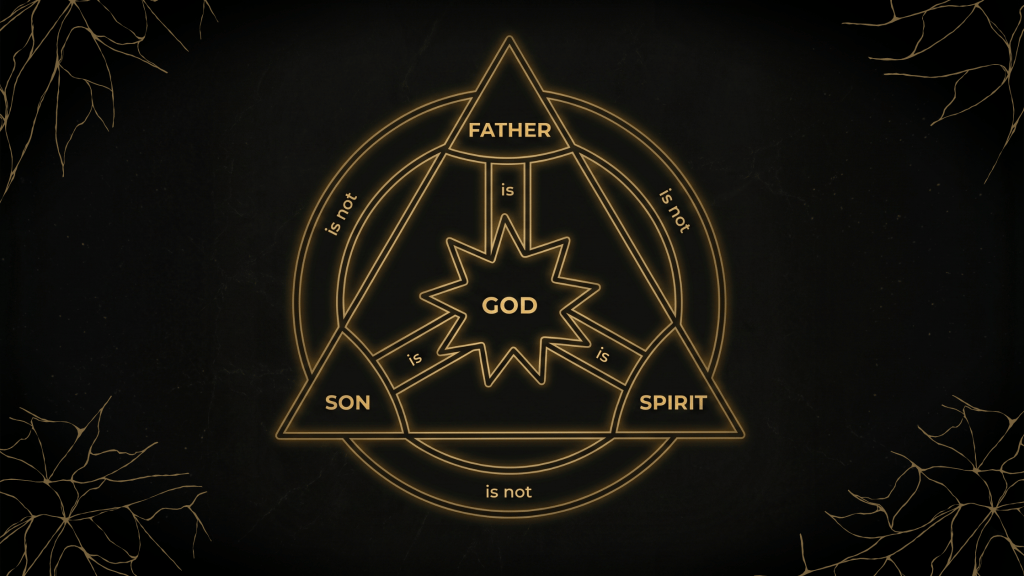
We believe in one God, eternally existing in three distinct persons: Father, Son, and Holy Spirit. We believe Jesus Christ is the eternal Son of God, fully divine and fully human, who lived a sinless life, died a substitutionary death on the cross, bodily resurrected on the third day, and will return to judge the living and the dead. Salvation is found in Him alone, freely offered by grace, and received through faith.
In essentials, unity; in non-essentials, liberty; in all things, charity.
The Gospel Truth Catechism
God is the holy, eternal, and loving Creator of all things visible and invisible. He exists eternally as a Trinity (Father, Son, and Holy Spirit) three distinct persons sharing one divine essence. He is totally sovereign, infinitely just, and perfectly merciful.
Yes. Jesus Himself declared, “I am the way, and the truth, and the life. No one comes to the Father except through me” (John 14:6). Because humanity’s sin required a perfect substitute, only Christ (who is both fully God and fully man) could bridge the gap. He is the sole Mediator between God and humanity (1 Timothy 2:5).
We view all earthly politics through the lens of the Kingdom of God. The Bible teaches that our primary citizenship is in Heaven (Philippians 3:20). While Christians should engage in the public square with truth, justice, and love, we reject any partisan ideology that attempts to hijack the Gospel. We do not put our hope in a political savior; our King is already on the throne (John 18:36). Read more about this here
We anchor human identity in the Imago Dei—the truth that mankind was created in the image of God. We believe God purposefully created humanity as male and female (Genesis 1:27; Matthew 19:4). While we approach those wrestling with gender and identity with deep compassion, pastoral care, and grace, we affirm that true freedom is found not in self-definition, but in surrendering to our Creator’s loving design. Read more about this here.
Scripture commands us to test the spirits (1 John 4:1) because not all spiritual power comes from God. We reject the use of astrology, manifestation, or mediums, as these practices seek spiritual power and knowledge apart from the Holy Spirit. Christ alone is our mediator, and God’s Word is our sufficient guide. We are called to worship the Creator, not the creation (Romans 1:25). Read more about this here.
It is both. True Christianity begins with a saving, transformational relationship with Jesus Christ (John 17:3). However, James 1:27 defines “pure and undefiled religion” as caring for orphans and widows and keeping oneself unstained by the world. We are saved into a relationship, which naturally produces the beautiful, organized religion of the global Church worshipping and serving together. Read more about this here.
No. God is eternally unchanging (Malachi 3:6). The perceived contrast between the “wrathful” God of the Old Testament and the “loving” Jesus of the New Testament is an ancient heresy called Marcionism. Scripture reveals the exact same holy, perfectly just, and infinitely merciful God operating in both covenants, culminating in the redemptive work of Christ. Read more about this here.
He commands both. Scripture teaches imputed righteousness (being legally declared righteous by faith in Christ’s finished work) and imparted righteousness (the active, lived-out holiness empowered by the Holy Spirit). Genuine faith is never passive; God’s grace doesn’t just forgive our sins—it transforms our nature so we can pursue obedience (1 Peter 1:15-16). Read more about this here.
Hebrews 9:27 states clearly: “It is appointed for man to die once, and after that comes judgment.” Human souls do not wander the earth. Unbiblical spiritual manifestations are often demonic “familiar spirits” attempting to deceive. We are strictly commanded to avoid mediums and the occult, trusting entirely in Christ’s authority over the unseen realm. Read more about this here.
The Didache (The Teaching of the Twelve Apostles) is a first-century discipleship manual. While it is not inspired Scripture and does not carry the infallible authority of the Bible, it is an invaluable historical window into how the early Church practiced baptism, fasting, and communion. It proves our faith has ancient, historically rooted orthodox practices. Read more about this here.
No. While Mormons use Christian terminology, their foundational texts redefine the nature of God, the Trinity, and the Gospel. Classic Christianity holds that God is eternal, Spirit, and uncreated. LDS theology teaches that God was once a mortal man who progressed to godhood. We love our Mormon neighbors deeply, which is why we must boldly defend the biblical, historical Gospel against false restoration claims (Galatians 1:8).
Biblical deconstruction isn’t about abandoning the faith; it’s about tearing down man-made, cultural traditions to rebuild your life on the solid rock of Scripture (Matthew 7:24). If deconstruction leads you away from Christ, sexual holiness, or the authority of the Word, it is not truth-seeking—it is apostasy. True reform always leads you back to Jesus. Read more about this here.
The bible is very clear that as a Christian we should expect persecution (1 Peter 4:12-14) Christ suffered greatly; now Christ-followers have the opportunity to follow Him even in this, showing His grace and power in their hopefulness, obedience, and faith. This is the contrast, we ‘may’ have wealth, status, and a good home, but we are told to be ready when we are persecuted and to put our faith in Him and He will strengthen us. Read more about this here.
After looking at both sides of this long-standing debate, it becomes clear that Scripture holds both faith and works in a tension that is not meant to be broken. We are saved by grace, through faith, in Christ alone. That much is clear from Paul’s writings in Ephesians 2 and Romans 3. No amount of effort, law-keeping, religious duty, or personal righteousness can make us right with God. Salvation is a gift of God’s grace, not a result of works, so that no one may boast. And yet, the Bible is equally clear that true saving faith does not stand alone. Read more about this here.
Want to ask your own questions?
Check out the latest podcast episodes!
Want to be a guest on the podcast?
Fill out this form below

